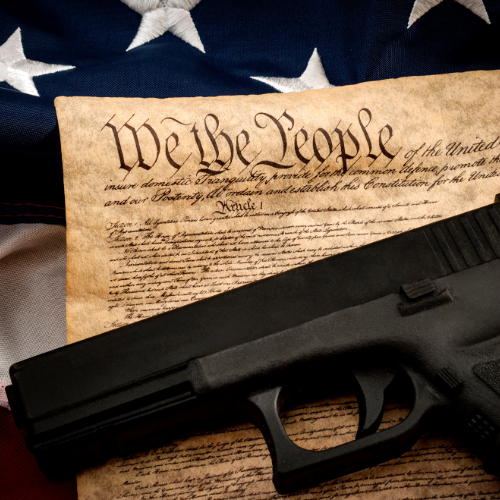
The right to keep and bear arms is a cornerstone of American liberty, enshrined in the Second Amendment. Constitutional carry—also known as permitless carry—allows law-abiding citizens to carry a concealed firearm without a government-issued permit, affirming that the Second Amendment is the only authorization needed. Far from the chaos critics predict, constitutional carry honors the Founding Fathers’ vision, aligns with modern legal frameworks, promotes reciprocity across states, and maintains federal background checks for gun purchases. With 29 states embracing this policy, the movement continues to gain momentum nationwide.
The Founding Fathers were unequivocal about the necessity of an armed citizenry. Thomas Jefferson wrote, “No free man shall ever be debarred the use of arms,” emphasizing the individual’s right to self-defense. George Mason, a key architect of the Bill of Rights, declared, “To disarm the people…[i]s the most effectual way to enslave them.” James Madison, in The Federalist No. 46, noted that an armed populace guards against government overreach. As Suzanne Hupp, a Texas legislator and Second Amendment advocate, stated, “How a politician stands on the Second Amendment tells you how he or she views you as an individual… as a trustworthy and productive citizen, or as part of an unruly crowd that needs to be lorded over, controlled, supervised, and taken care of.” Constitutional carry removes bureaucratic barriers, embodying the liberties the Founders championed.
As of May 2025, 29 states have adopted constitutional carry: Alabama, Alaska, Arizona, Arkansas, Florida, Georgia, Idaho, Indiana, Iowa, Kansas, Kentucky, Louisiana, Maine, Mississippi, Missouri, Montana, Nebraska, New Hampshire, North Dakota, Ohio, Oklahoma, South Carolina, South Dakota, Tennessee, Texas, Utah, West Virginia, Wyoming, and Vermont. Vermont, the pioneer, has never required concealed carry permits, earning the term “Vermont carry.” These states affirm that the Second Amendment is a right, not a privilege gated by red tape. Additional states, such as North Carolina, are exploring similar measures to align with this growing trend.
Far-left critics claim constitutional carry will unleash gun violence, evoking “Wild West” scenarios. Yet, evidence from the 29 states tells a different story. A 2013 CDC report estimated 500,000 to 3 million defensive gun uses annually, often preventing crimes without firing a shot. A 2017 FBI study found no significant crime increase in permitless carry states. Opponents argue that permitless carry endangers safety by allowing younger adults to carry without training, but proponents, backed by groups like Grass Roots North Carolina, counter that law-abiding citizens deserve their rights without hurdles, as demonstrated in states like Tennessee.
Constitutional carry does not eliminate gun purchase regulations. Federal law requires buyers from licensed dealers to complete ATF Form 4473 and pass a National Instant Criminal Background Check System (NICS) screening, barring felons, domestic abusers, or those adjudicated mentally ill. Constitutional carry only applies to carrying a legally owned firearm while maintaining these federal safeguards. Critics who conflate permitless carry with lax ownership laws misrepresent the policy to stoke fear.
Constitutional carry also supports concealed carry reciprocity across states. Many of the 29 states issue “shall-issue” permits, allowing residents to carry in states recognizing those permits. For example, Oklahoma recognizes permitless carry from other states for qualifying non-residents. States considering constitutional carry ensure permits remain available for reciprocity, vital for travelers, as states like Virginia require permits. This patchwork underscores the need for federal legislation like the Constitutional Concealed Carry Reciprocity Act, which would make permits valid nationwide, like driver’s licenses.
Far-left objections ignore criminal behavior realities. A 1985 Department of Justice study found that only one in five felons obtained guns legally. Criminals bypass permits, so burdening law-abiding citizens is ineffective. Constitutional carry empowers responsible individuals to defend themselves when police response—averaging 10 minutes nationally—may be too late. As Supreme Court Justice Joseph Story wrote, “The right of the citizens to keep and bear arms has justly been considered, as the palladium of the liberties of a republic.”
Constitutional carry fosters a culture of civic duty. By trusting citizens, states acknowledge the Second Amendment’s role in preserving freedom. Alexander Hamilton, in The Federalist No. 29, called an armed populace “the best and most natural defense of a free country.” States adopting constitutional carry reject outdated restrictions, prioritizing liberty.
In conclusion, constitutional carry stands as a powerful affirmation of Second Amendment rights, grounded in the Founders’ vision of a free and self-reliant citizenry. Validated by the experience of 29 states, it rejects the notion of chaos, instead trusting law-abiding citizens to exercise their rights responsibly while preserving federal background checks for firearm purchases and supporting interstate reciprocity. As George Washington reportedly said, “A free people ought not only to be armed, but disciplined.” Constitutional carry upholds this principle, safeguarding both individual liberty and the security of a free nation.


0 Comments